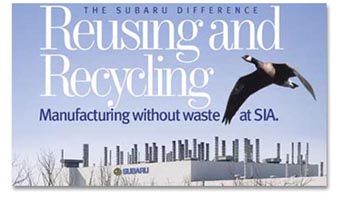
...Subaru no longer adds anything to landfills. Furthermore, Subaru is more than willing to share its good ideas, and has done so with other auto manufacturers.
Honda has benefited from Subaru's methods and shares the "Reduce, Reuse, Recycle" philosophy. The big H's Alabama plant, where they make Odysseys and Pilots, is also a zero-landfill plant. Honda has also placed Energy Star reflective roofing on a number of their buildings. This type of roof reduces surface temperatures, and reduces the amount of air conditioning needed, thus making the building more energy efficient.
Rolls-Royce's Goodwood, England, plant (which opened in 2003) boasts an 8-acre "living roof." Covered with sedum plants, this roof provides insulation from the heat and the cold; of course, as is the case with all green plants, these sedum plants also clean the air by ingesting carbon dioxide and producing oxygen. The Rolls plant also sends waste leather (from the upholstery division) to shoe and clothing makers, and filters run-off water from the roof and parking lots before it enters an on-site lake. Ford's Rouge plant, which makes the F-150 pickup, also employs a living roof and similar water-saving measures.
Toyota has even managed to make a small business out of being green. Toyota Roof Garden, a subsidiary of Toyota Motors, has made a business of selling living roof tiles that it claims are as easy to install as laying down carpet in your home.
In the automotive high-jump event known as environmental safeguarding, Subaru set a world record of sorts by being the first automaker to achieve "zero waste to landfill" status. Indeed, the company set the bar very high, and it's great to see that others have been inspired to start clearing that bar as well.